Guide
How Much Epoxy Do I Need? Coverage by Mil Thickness
One simple number turns a data sheet's mil rating into gallons or litres. Here is the formula, a ready reference chart and a worked garage example.
· 4 min read

How much epoxy do you need? Divide 1,604 by the wet film thickness in mils and you have square feet per US gallon. Running short in the middle of a body coat leaves a cold joint you can see forever, and ordering three extra kits ties up cash.
Epoxy coverage formula: 1,604 ÷ mils
One US gallon of liquid spread at exactly 1 mil (one thousandth of an inch) thick covers 1,604 sq ft. So:
Coverage in sq ft per gallon = 1,604 ÷ wet mils
In metric, one litre spread 1 mil thick covers about 39.4 m², so:
Coverage in m² per litre = 39.4 ÷ wet mils
Use the wet film thickness (WFT) from your coating's data sheet. That is also the number that picks your notched squeegee.
Epoxy coverage chart: sq ft per gallon and m² per litre (theoretical, before waste)
5 mils: 321 sq ft per gallon, 7.9 m² per litre
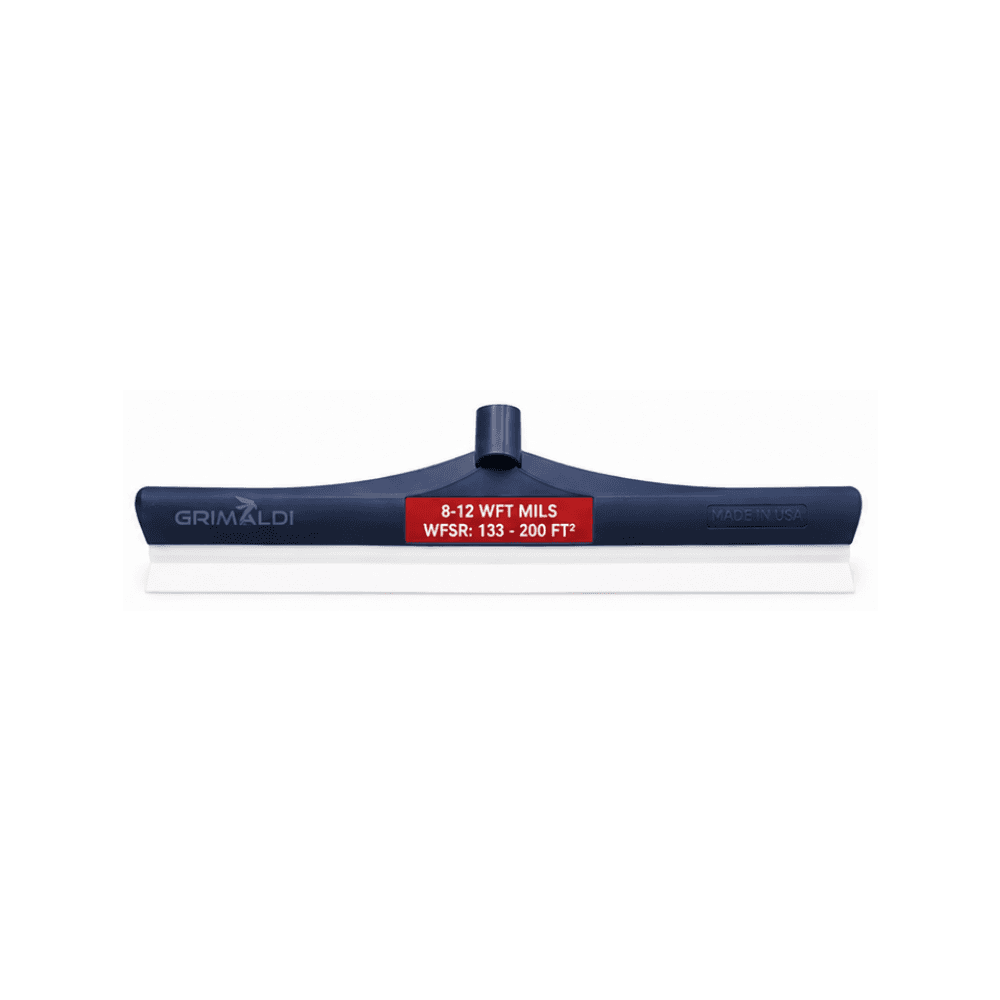
8 mils: 200 sq ft per gallon, 4.9 m² per litre
10 mils: 160 sq ft per gallon, 3.9 m² per litre
12 mils: 134 sq ft per gallon, 3.3 m² per litre
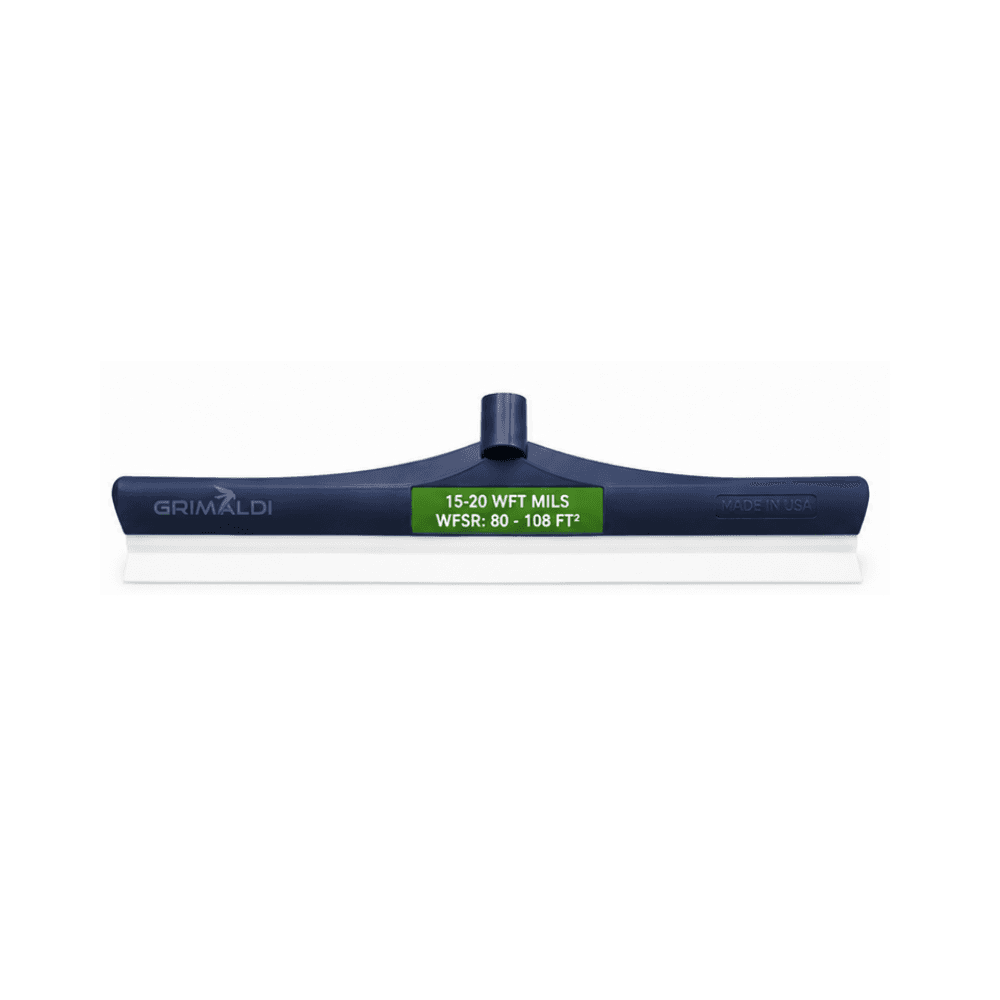
15 mils: 107 sq ft per gallon, 2.6 m² per litre
20 mils: 80 sq ft per gallon, 2.0 m² per litre
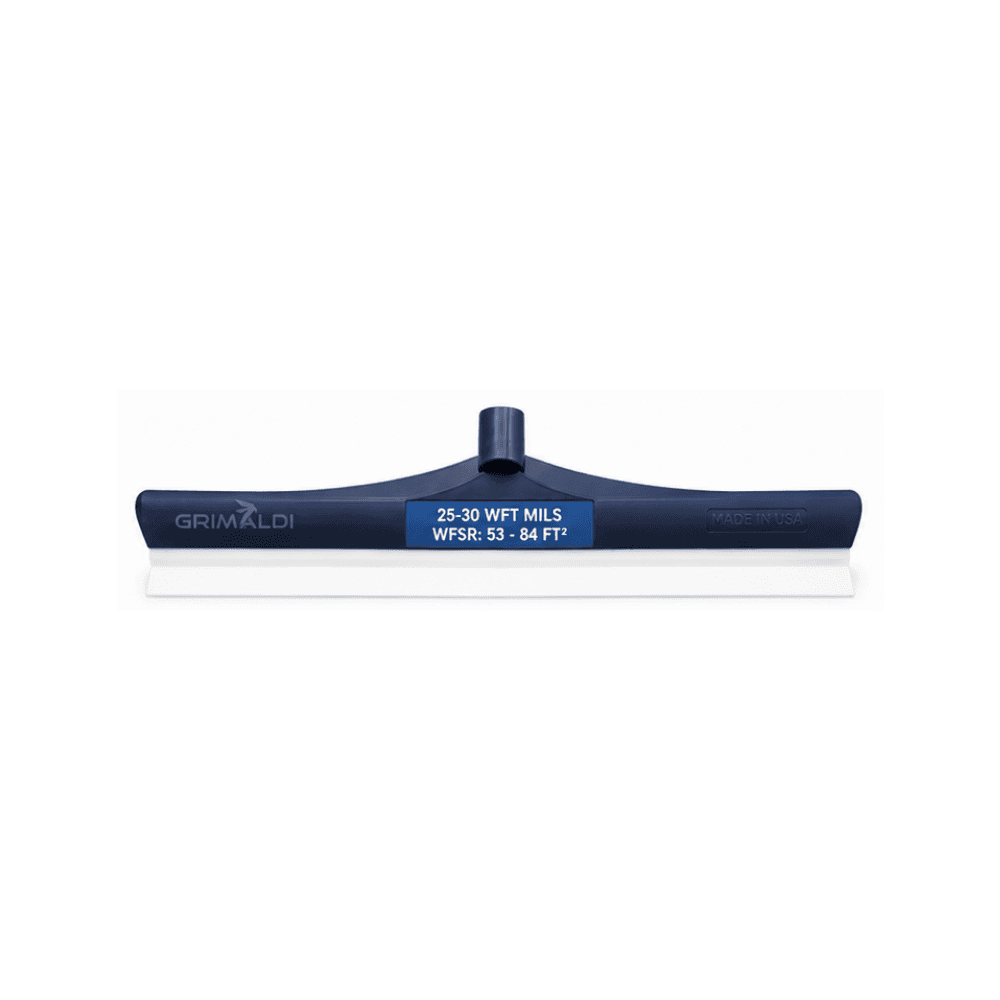
25 mils: 64 sq ft per gallon, 1.6 m² per litre
30 mils: 53 sq ft per gallon, 1.3 m² per litre
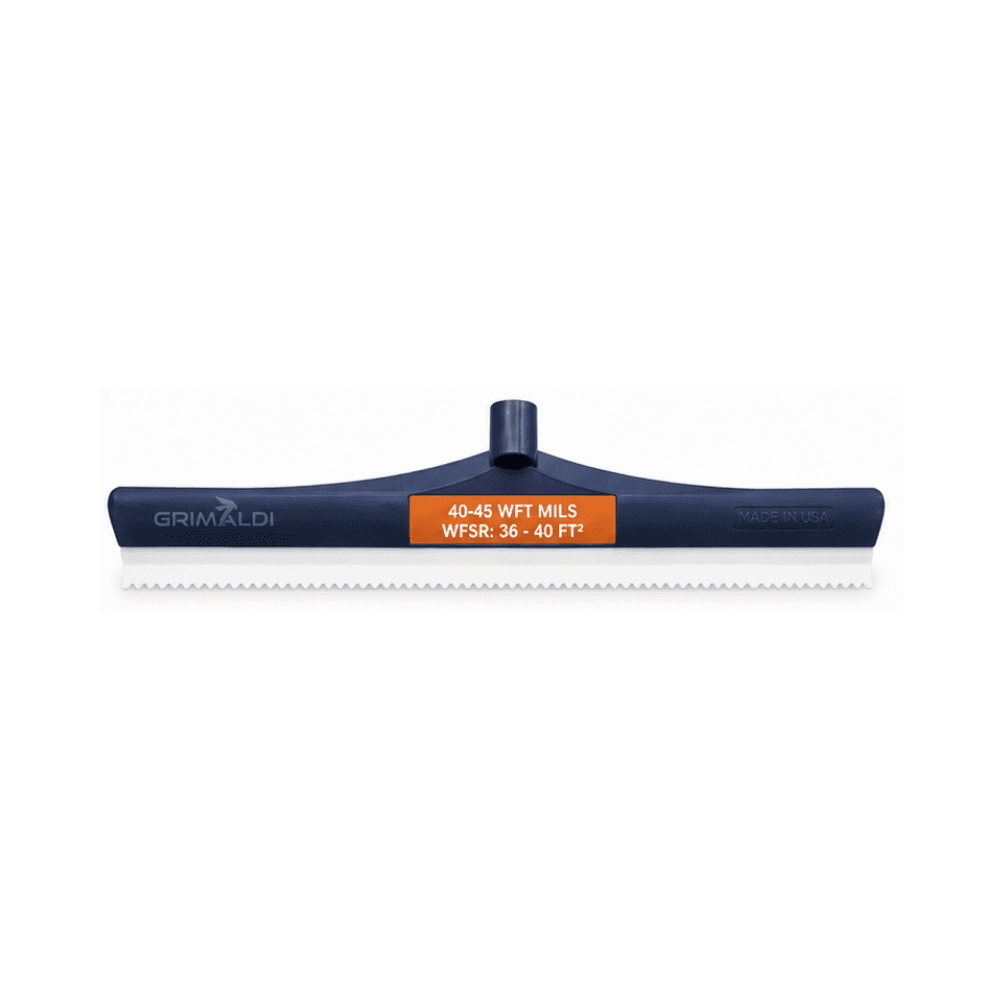
40 mils: 40 sq ft per gallon, 1.0 m² per litre
45 mils: 36 sq ft per gallon, 0.9 m² per litre
50 mils: 32 sq ft per gallon, 0.8 m² per litre
60 mils: 27 sq ft per gallon, 0.7 m² per litre
Add for the real floor
The chart assumes a perfectly flat, sealed surface. Real floors take more:
Porous or freshly ground concrete soaks up primer. The primer coat almost always uses more than the chart says, and priming porous concrete also helps prevent bubbles and pinholes.
Rough profile and low spots hold extra material.
Waste: what stays in the pail, on the squeegee and on the roller.
Order extra on top of the chart figure. How much depends on the slab and the system, so check the coating maker's own coverage guidance and your past jobs.
Wet mils and dry mils
The data sheet may give a dry film thickness (DFT) as well. For a 100% solids epoxy, wet and dry are about the same. For a product that contains solvent or water, the film shrinks as it cures, so you need more wet mils to reach the dry figure. Always work from the wet number for coverage.
Worked example: a two car garage
A 20 by 20 ft garage is 400 sq ft. The body coat calls for 20 mils wet.
Coverage at 20 mils: 1,604 ÷ 20 = 80 sq ft per gallon
Gallons needed: 400 ÷ 80 = 5 gallons
Add extra for profile and waste, then round up to whole kits
For the tools a garage job needs, see the garage flake floor tool checklist.
Match the squeegee to the mils
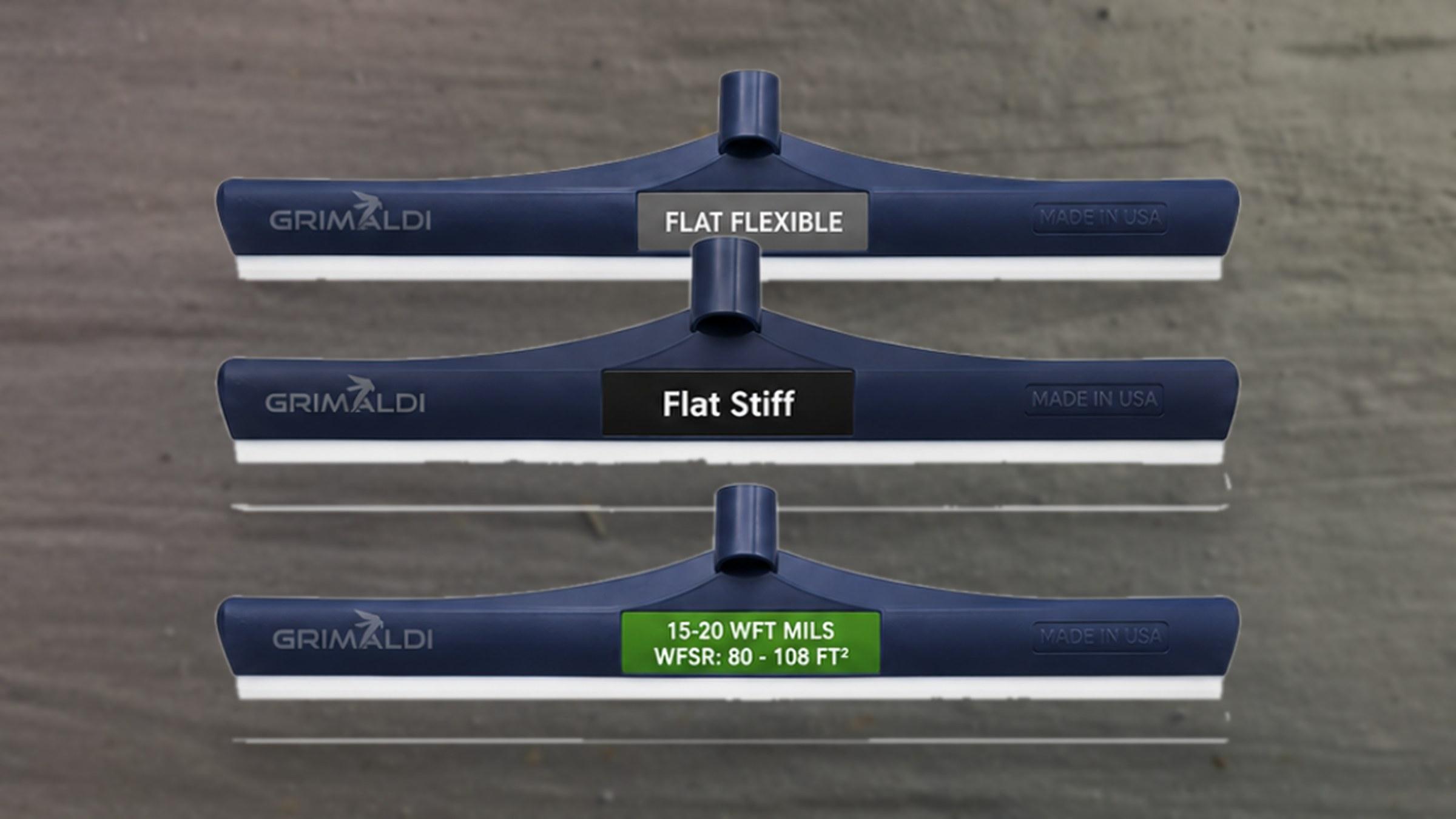
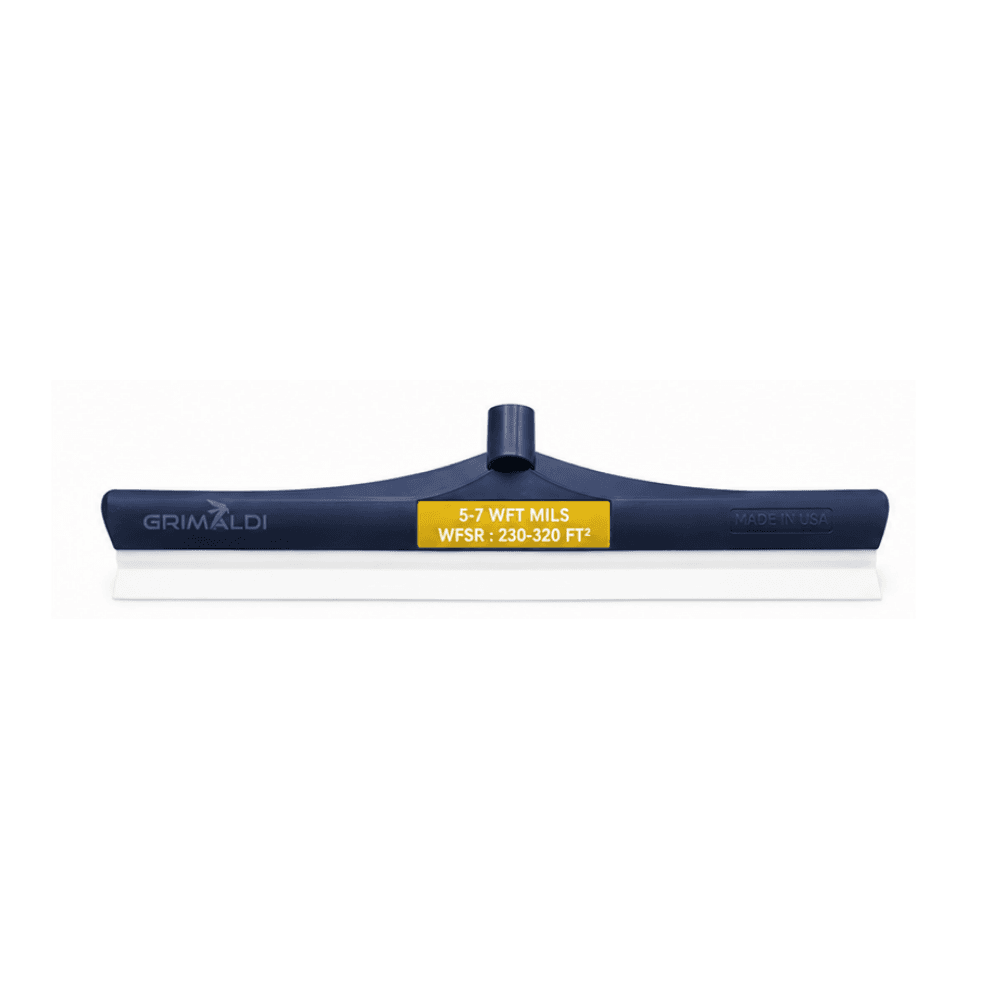
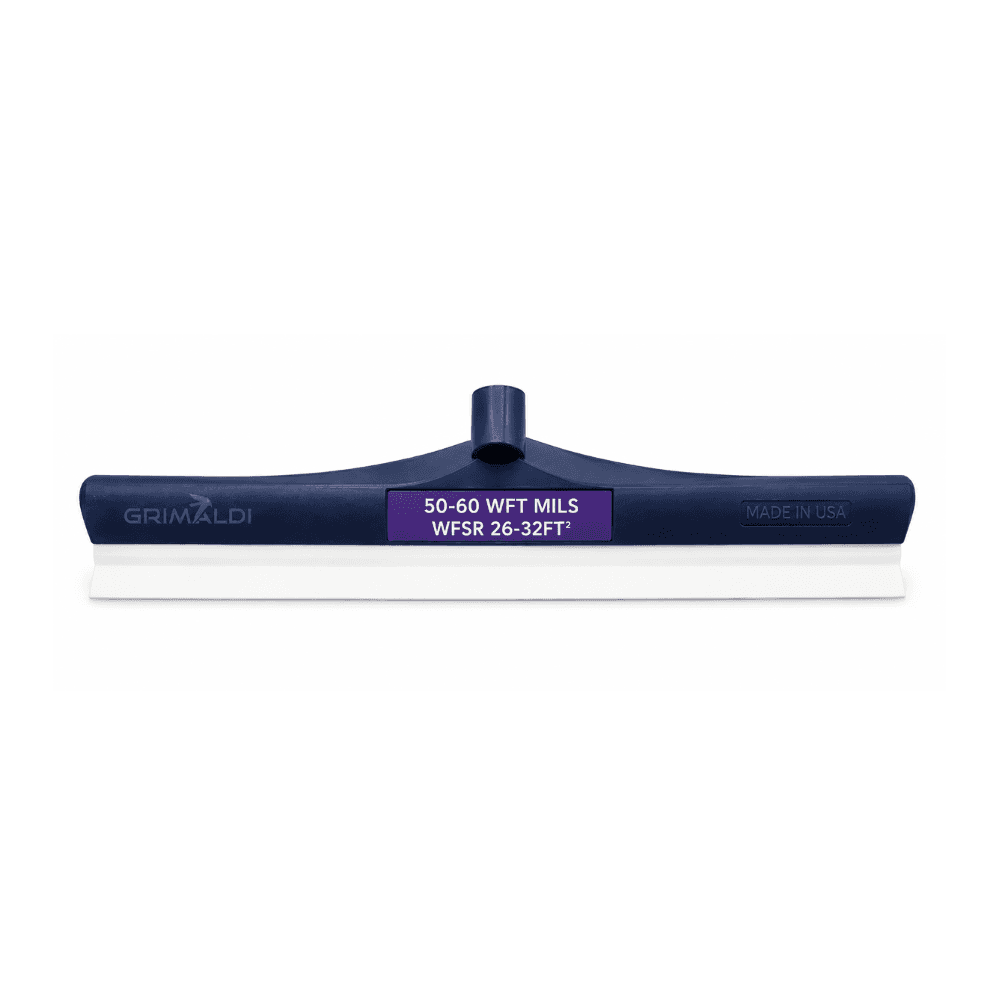
A notched squeegee meters the film so the coverage you calculated is the coverage you get. Not sure when to use notched or flat? See flat or notched squeegee. Grimaldi notched squeegees come in 18" and 24" widths:
5 to 7 mils and 8 to 12 mils: primers, sealers and topcoats
15 to 20 mils: standard body coats
25 to 30 mils: heavier body and broadcast coats
40 to 45 mils and 50 to 60 mils: high build and self leveling systems
See all squeegees.
For the order of work, see laying an epoxy body coat with a notched squeegee.
Questions contractors ask
How many square feet does a gallon of epoxy cover?
In theory, 1,604 divided by the wet mils: about 160 sq ft per gallon at 10 mils and 80 sq ft at 20 mils. Real floors take more, so order extra.
Should I use wet mils or dry mils?
Wet mils. For a 100% solids epoxy they are about the same; for products with solvent or water, you need more wet mils to reach the dry figure.
How much extra should I order?
It depends on the slab and the system. Check the coating maker's coverage guidance and your past jobs, and allow more on porous or freshly ground concrete.